
A Guide by Archilexis
Picture a bedsheet. Pull it from both ends and it barely budges. Now snip a tiny notch in the edge and pull again. Consequently, it rips across in a second. This demonstrates Tensile Strength vs Tear Strength.
That is the difference between Tensile Strength vs Tear Strength.
Both appear on every membrane datasheet.
Moreover, every tensile structure—from a parking canopy to a walkway cover—needs both to perform.
This is why Archilexis, as a tensile structure manufacturer, treats fabric selection as an engineering decision, not a price comparison.
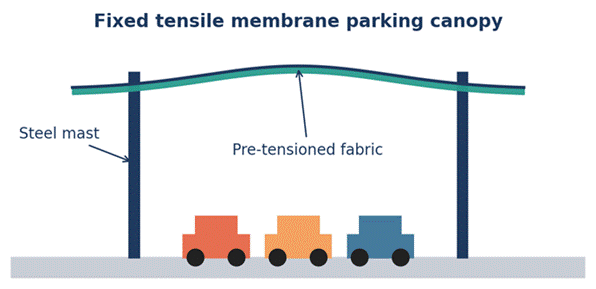
Figure 1: A fixed tensile membrane canopy over parking bays
Tensile Strength: The Pull Test
Tensile strength is how much stretching force an undamaged fabric can handle before it fails. Labs pull a narrow strip of fabric until it snaps and record the load, usually in N/5 cm.
Woven fabric is tested in two directions, along the roll (warp) and across it (weft). Designers check both, because wind pushes on a canopy from every side.
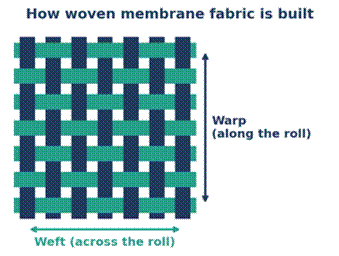
Figure 2: Warp and weft yarns in a woven fabric
For a fixed tensile structure, this is the number that tells engineers the roof’s safe load.
Additionally, it accounts for wind gusts, rain pooling, and pre-tension.
This provides Tensile Strength vs Tear Strength context.
Moreover, at Archilexis, this is the baseline figure our engineers use when designing every tensile membrane structure.
Tear Strength: The Damage Test
Tear strength measures how well a fabric resists a rip that has already begun. Think of a nick from a sharp bracket, a stray bolt hole, a tree branch, or an object blown in by a storm.
The number is far smaller than the tensile figure, which surprises many buyers. Good weaving and coating help the yarns gather together at the tear point and share the load, which slows the rip down. When Archilexis specifies fabric for public or high-wind sites, tear resistance is checked alongside tensile strength, not left as an afterthought.
A Simple Way to Remember It
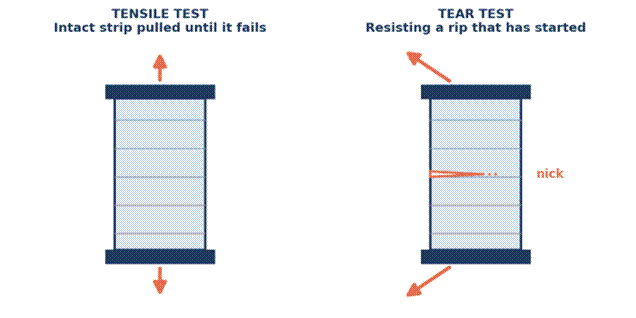
Figure 3: Tensile test versus tear test
| Tensile strength | Tear strength | |
| Think of it as | The fabric’s muscle | The fabric’s toughness |
| Tests | Intact material | Material with a cut |
| Matters most for | Sizing the structure | Surviving real-world damage |
Why Choose Archilexis for Your Tensile Membrane Structure
A fabric that is strong on paper can still fail early if the structure around it is poorly engineered. At Archilexis, we look at both numbers and prioritize engineering over shortcuts:
- Right Membrane Grade: We offer PVC, PTFE, and ETFE membranes, and match the grade to the span, shape, and exposure of each project.
- Load Engineering: Every structure is designed around the wind, rain, and site conditions it will actually face, not a generic assumption.
- Seam and Weld Quality: A seam is only as good as its weld, so fabrication quality control protects the whole roof.
- Turnkey Capability: Archilexis offers a complete in-house service, from design and fabrication to on-site installation, so fabric is handled correctly from the factory to the final tensioning.
What Changes These Numbers in the Real World
Datasheet values are for new fabric in a lab. On site, performance depends on:
- Sun and Weather: Surface coatings shield the yarns underneath, and their quality decides how fast strength fades.
- Heat: Fabric is weaker at high temperatures, which matters for open parking areas in hot climates.
- Handling: Sharp folds during transport and installation can leave weak lines.
- Grime and Moisture: Dirt that is never cleaned can wear down the coating over the years.
What to Ask Any Tensile Structure Manufacturer, Including Archilexis
Not every fabric structure company explains these numbers clearly. When evaluating a tensile structure manufacturer, ask these questions before you order. Our team at Archilexis is always happy to answer them:
- Which fabric grade suits my span and wind zone?
- What safety factor does the design use for loads?
- Is the tear rating suited to a public or high-traffic site?
- Will I receive test reports for the batch used on my project?
- How are seams welded and tested?
The Bigger Picture: Tensile Structures Built to Last
For instance, Tensile Strength vs Tear Strength guides how a structure is designed. Moreover, Tear strength decides whether a small accident stays small. Thus, a durable, long-term design uses both factors from the start. Archilexis follows this approach on every project, from fixed parking structures to walkway covers and canopies.
Contact Archilexis (archilexis.com) today to consult with our experts on your next tensile membrane structure project.