
What is the Role of a Catenary Cable in Tensile Architecture?
What Is a Catenary Cable?
A catenary cable is a flexible line suspended between two supports under its own weight, illustrating catenary cable tensile architecture.
This seemingly simple shape is actually one of nature’s most efficient forms within catenary cable tensile architecture.
Unlike rigid beams that resist loads through bending, catenary cable tensile architecture relies almost entirely on tension, allowing it to carry enormous loads while using remarkably little material.
This natural efficiency is exactly why catenary principles have become the foundation of modern tensile membrane architecture.
Why Are Catenary Cables So Important in Tensile Architecture?
Every tensile fabric structure depends on a carefully balanced network of tension forces.
Without properly designed cables, the membrane cannot maintain its shape, resist wind loads, or distribute structural forces evenly.
The catenary cable tensile architecture enables several essential functions.
It supports structure and governs tension and load.
- Maintains the designed membrane geometry
- Distributes loads evenly across the fabric
- Minimizes structural stress concentrations
- Prevents sagging and deformation
- Enhances structural stability during high winds
- Extends the lifespan of the membrane system
At Archilexis, every project begins with detailed structural calculations.
These calculations ensure the catenary cable tensile architecture performs as intended under real-world conditions.
How Catenary Cables Support Tensile Fabric Structures
Imagine stretching a fabric sheet tightly from every direction.
Now imagine removing the tension.
The fabric instantly wrinkles, sags, and loses its shape.
The same concept applies to architectural membranes.
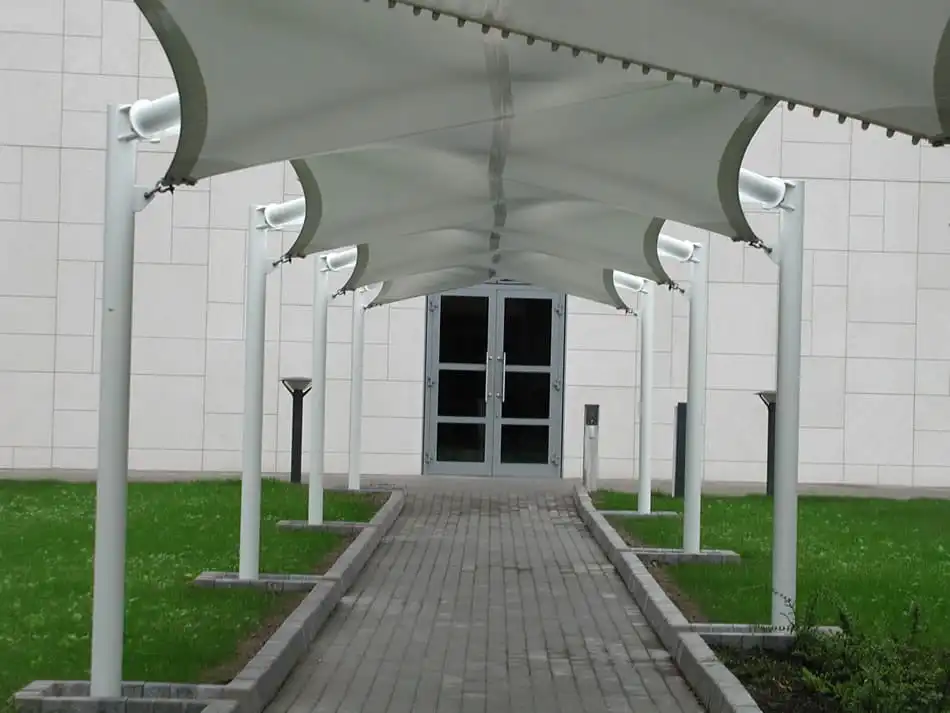
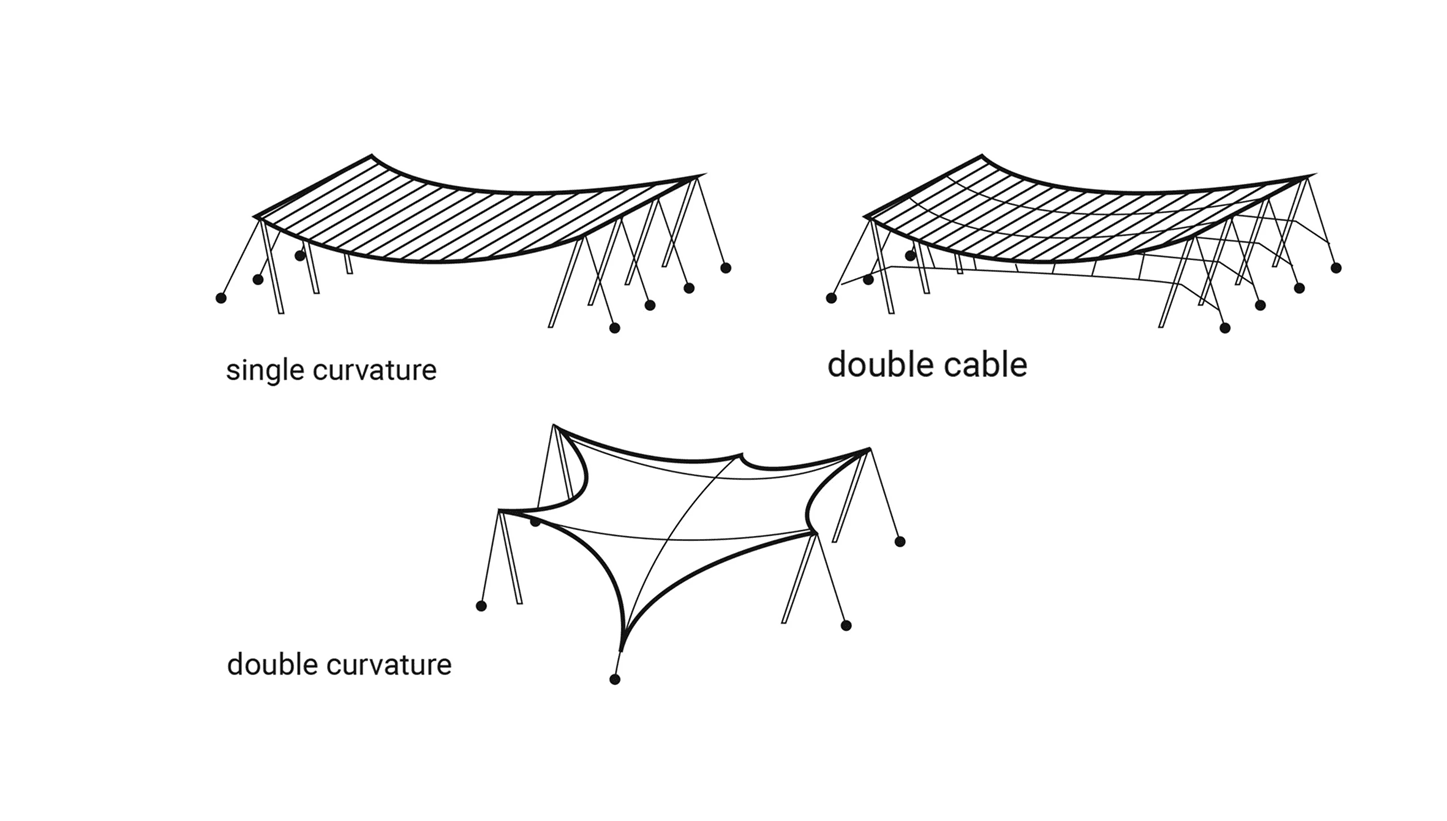
Catenary cables create the boundary tension that keeps the membrane stretched into its designed double-curved form.
This continuous tension enables the structure to withstand:
- Wind pressure
- Rainwater loads
- Snow loads (where applicable)
- Dynamic environmental forces
- Temperature fluctuations
Without these cables, even premium tensile fabrics cannot perform effectively.
Key Advantages of Catenary Cable Systems
Exceptional Structural Strength
Although cables appear lightweight, high-strength steel cables can carry tremendous tensile forces while remaining incredibly efficient.
This allows architects to create large column-free spaces that would otherwise require heavy conventional construction.
Elegant Architectural Appearance
One of the defining characteristics of tensile architecture is its flowing, sculptural appearance.
The smooth curves seen in iconic tensile roofs are created by carefully engineered catenary cable systems.
The result is architecture that feels dynamic, modern, and visually striking.
Material Efficiency
Because tensile structures rely on tension rather than compression, they require significantly less structural steel than many conventional roofing systems.
This leads to:
- Lower structural weight
- Faster construction
- Reduced foundation requirements
- Improved sustainability
At Archilexis Tensile, optimizing material efficiency is a key part of every project’s engineering approach.
Better Load Distribution
-Wind rarely blows uniformly.
-Rain doesn’t always fall evenly.
-Temperature changes constantly.
-Catenary cables help distribute these changing loads across the membrane rather than allowing stress to concentrate in one location.
This dramatically improves long-term structural performance.
Longer Service Life
A properly tensioned membrane experiences fewer wrinkles, less fatigue, and reduced material wear.
As a result:
- Fabric lasts longer
- Maintenance costs decrease
- Structural reliability improves
- Overall lifecycle cost reduces
Professional engineering during the design phase is what makes this longevity possible.
Why Choose Archilexis?
At Archilexis, we don’t simply install tensile structures—we engineer architectural solutions that combine structural integrity, functionality, and visual elegance.
Our approach includes:
- Customized tensile design solutions
- Advanced structural engineering
- High-quality membrane materials
- Precision cable detailing
- Durable steel fabrication
- Professional installation
- Timely project execution
- End-to-end project support
From compact residential canopies to large-scale commercial tensile roofing, our team focuses on creating structures that are as reliable as they are visually impressive.
When engineering excellence meets innovative design, extraordinary spaces become possible.
Catenary cables transform lightweight fabric into stable, durable, and efficient architectural systems capable of spanning vast spaces with elegance and strength.
As demand grows for sustainable, visually appealing, and cost-effective roofing solutions, understanding the role of catenary cables helps reveal why tensile architecture continues to redefine modern construction.
At Archilexis, every project is built on this foundation of intelligent engineering, precision detailing, and architectural innovation. Whether you’re planning a commercial canopy, parking structure, walkway cover, or iconic landmark roof, our expertise ensures your vision is supported by science as much as by design.
Frequently Asked Questions (FAQs)
1. What is a catenary cable in tensile architecture?
A catenary cable is a high-strength steel cable that naturally forms a curved shape under tension. It supports tensile membranes by maintaining their shape and efficiently distributing structural loads.
2. Why are catenary cables important in tensile structures?
They provide the necessary tension that keeps the fabric membrane stable, prevents sagging, improves wind resistance, and increases the overall durability of the structure.
3. What materials are catenary cables made from?
Most catenary cables are manufactured using galvanized or stainless steel to provide high tensile strength, corrosion resistance, and long-term durability.
4. How do catenary cables improve structural safety?
By evenly distributing loads and minimizing stress concentrations, catenary cables help tensile structures withstand wind, rain, and other environmental forces while maintaining stability.
5. Can catenary cable systems be customized?
Yes. Every tensile project requires custom-designed cable geometry, tension levels, and anchoring systems based on span, loading conditions, and architectural requirements.
6. Where are tensile structures with catenary cables commonly used?
They are widely used for car parking shades, commercial canopies, sports facilities, airports, malls, hotels, resorts, industrial sheds, educational campuses, walkways, and public gathering spaces.
7. How long do catenary cable tensile structures last?
With quality materials, proper engineering, and routine maintenance, well-designed tensile structures can perform reliably for 20–30 years or more, depending on the membrane material and environmental conditions.
8. Why should I choose Archilexis for my tensile structure project?
Archilexis combines innovative architectural design with precise structural engineering to deliver customized, durable, and visually striking tensile solutions. From concept and analysis to fabrication and installation, our team ensures every project meets high standards of safety, performance, and aesthetics.