
Toll Plaza Tensile Canopy: Durable, Large-Span Shade Structures for Toll Roads
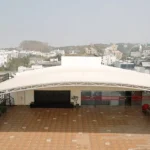
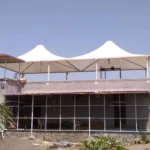
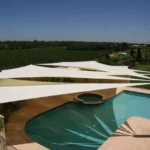
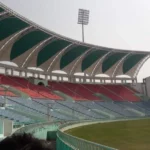
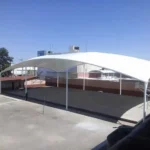
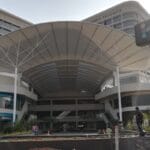
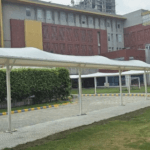
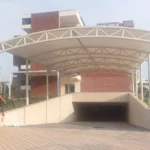
What Is a Toll Plaza Tensile Canopy?
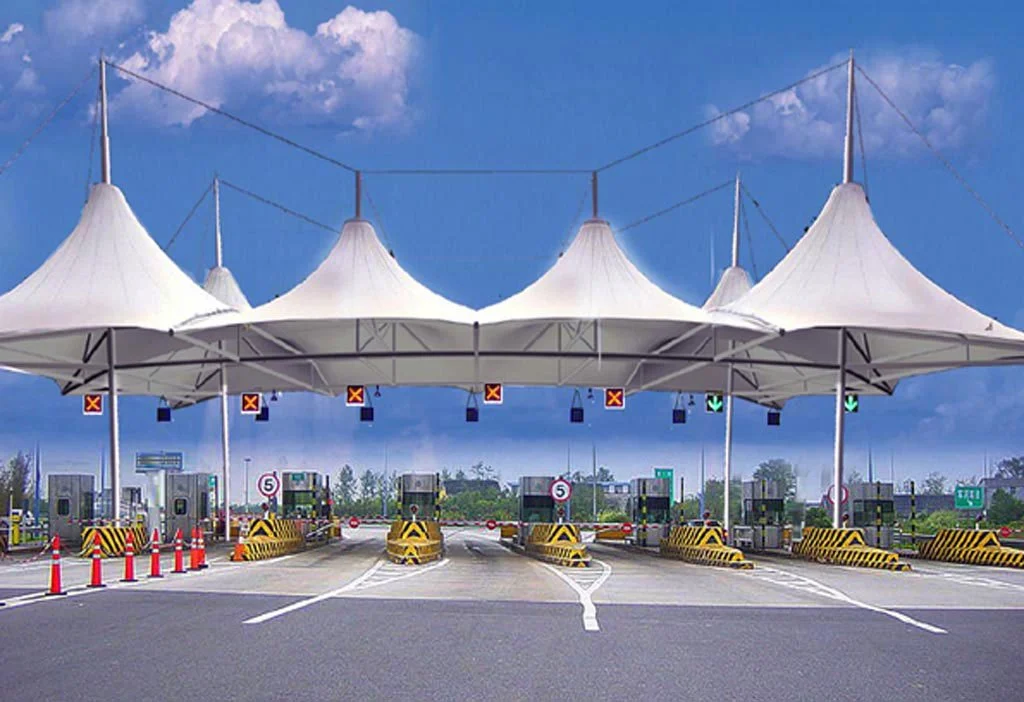
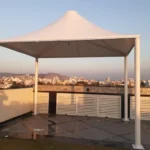
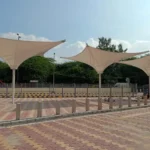
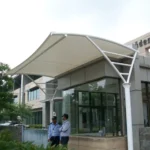
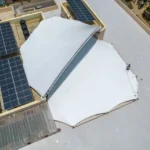
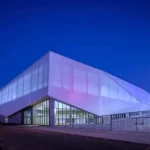
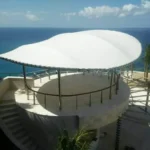
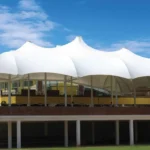
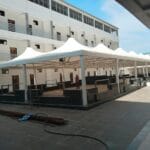
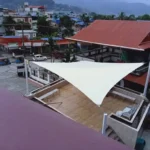
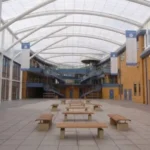
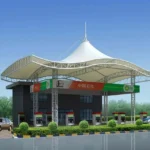
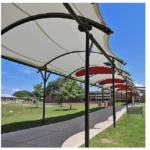
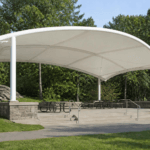
A Toll Plaza Tensile Canopy is a shade and weather-protection system in which a flexible architectural membrane is tensile over an engineered supporting structure. The membrane and the structural framework work together to form a stable three-dimensional roof. This roof transfers highway loading conditions while keeping the lanes below free of obstructions.
The system maintains shade and weather protection for travelers at busy plazas. Its design emphasizes tensile membranes and a supporting frame to ensure stability across varying highway loads.
A system can span a single lane, a cluster of lanes, or the full width of Toll Plaza Tensile Canopy.
It can also extend to cover adjoining walkways, staff cabins, and administrative buildings.
Common geometries include ridge-and-valley, conical, cantilevered, and barrel-vault forms, selected to suit lane width, mast spacing, and drainage requirements.
Why Choose a Tensile Canopy for a Toll Plaza?
A well-designed toll plaza tensile canopy does more than shade the booths — it becomes a durable, low-maintenance piece of highway infrastructure.
Key advantages of a toll plaza tensile canopy include:
- Protection for toll staff, equipment, and vehicles from sun and rain
- Long, column-light spans across multiple lanes
- Minimal obstruction to driver sightlines and traffic movement
- Lightweight structural construction suited to highway loading conditions
- Distinct, recognizable architectural form for a toll plaza
- Large-area coverage with fewer supporting columns
- Options for translucent or opaque membranes for daylighting or glare control
- Resistance to vehicle exhaust, dust, and UV exposure with appropriate membrane selection
- Integration with toll booths, gantries, ETC/FASTag installations, and signage
- Low-maintenance performance over a long service life
- Adaptability to expressways, national highways, urban toll points, and bridge/tunnel approaches
The actual performance of the structure depends on the engineering design. Membrane specification, support layout, location, and environmental conditions also play a role.
Toll Plaza Tensile Canopy Design
Understanding the lane layout, traffic volume, and site conditions at the plaza starts the Toll Plaza Tensile Canopy design.
The structure must provide continuous shade and rain protection while maintaining vehicle clearance and safe sightlines.
It should also ensure drainage and a coordinated appearance across the plaza.
Important design considerations may include:
- Number and width of toll lanes to be covered
- Overall span and canopy length
- Column and mast positions relative to lane dividers
- Membrane geometry and roof pitch
- Vehicular clearance height
- Wind and environmental loads, including turbulence from passing vehicles
- Rainwater drainage away from lanes and booths
- Steel structure and foundation design
- Cable and connection arrangements
- Membrane material and light transmission
- Integration with toll booths, barriers, gantries, and lighting
- Installation sequencing to minimize disruption to live traffic
- Maintenance and access requirements
The final form is developed through coordination between highway engineering, structural design, and architectural detailing, rather than a standard off-the-shelf shed roof.
Toll Plaza Tensile Canopy Structure Components
A typical Toll Plaza Tensile Canopy consists of several interconnected components.
Steel Supporting Structure
Columns, portal frames, masts, or cantilevered arms positioned along the plaza median and lane edges provide the primary support, arranged to keep lanes clear.
Tensile Membrane
The fabric forms the roof surface, designed for the required span, environmental exposure, light transmission, and durability against vehicular pollutants and UV.
Cables and Connection Systems
Cables, plates, brackets, and clamps transfer membrane forces to the supporting structure across long, continuous spans.
Foundations and Anchoring
Foundations are designed for highway ground conditions, vehicle proximity, and the loads generated by wide-span structures.
Drainage System
The membrane geometry and gutter detailing are designed to direct rainwater away from toll lanes, booths, and pedestrian areas to designated drainage points.
Types of Toll Plaza Tensile Canopy Structures
Single-Lane Canopy
Covers an individual toll booth and lane, suitable for smaller plazas or phased upgrades.
Multi-Lane Continuous Canopy
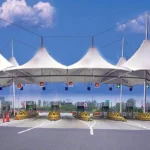
A continuous membrane roof spanning several lanes from a shared row of masts or columns, providing uniform coverage across the plaza.
Cantilever Toll Canopy
Supports positioned along one side or the median allow the canopy to extend over lanes without columns between lanes, keeping traffic paths unobstructed.
Full-Width Plaza Canopy
Covers the entire width of the toll plaza in a single coordinated structure, often used at high-traffic expressway plazas.
Gantry-Integrated Canopy
Combines the tensile canopy with ETC/FASTag gantries, signage structures, and lighting masts into a single coordinated system.
Toll Booth Tensile Canopy
A Toll Booth Tensile Canopy provides shade and rain protection directly over the booth and adjoining lane, protecting toll collection staff, cash and card equipment, and electronic toll systems from continuous outdoor exposure.
The roof geometry and mast positions can be coordinated with existing booth structures, barrier gates, and lane markings so that the canopy integrates cleanly with the plaza’s operational layout.
FASTag and ETC Lane Tensile Canopy
Electronic toll collection lanes benefit from continuous weather protection to safeguard RFID readers, cameras, sensors, and gantry-mounted equipment.
A FASTag Lane Tensile Canopy can be designed to cover the lane and gantry together, coordinating structural masts with sensor mounting points, signage, and lighting.
Applications of Toll Plaza Tensile Canopy Structures
Toll plaza tensile canopies can be used across a wide range of highway and access-control environments, including:
- Expressway and national highway toll plazas
- State highway and urban toll points
- Bridge and tunnel approach toll stations
- Weigh-in-motion and inspection lanes
- Border and check-post crossings
- Parking and access-control barriers at large facilities
- Toll administration buildings and staff walkways
- Electronic toll collection (ETC/FASTag) lane covers
Because the tensile system can be customized in span, height, and geometry, the same technology can be adapted to plazas of very different lane counts and traffic profiles.
Tensile Membrane Materials for Toll Plaza Canopies
The membrane is one of the most important components of a toll plaza tensile canopy. Material selection should be based on the project’s location, traffic-related exposure, environmental conditions, desired appearance, and required performance.
PVC-Coated Polyester
A commonly used membrane material, available in different weights, coatings, and translucency levels, suited to a wide range of toll canopy applications.
PTFE-Coated Fiberglass
A high-performance membrane option for plazas where long-term outdoor durability, fire performance, and resistance to pollution are important considerations.
ETFE
A lightweight fluoropolymer option for specialized applications requiring high light transmission with a lightweight envelope.
Material selection should be finalized according to project specifications, expected traffic-related exposure, and manufacturer’s technical data.
Custom Toll Plaza Tensile Canopy Design
Every toll plaza has a different lane count, traffic profile, and site layout. A Custom Toll Plaza Tensile Canopy can therefore be developed around the specific characteristics of the plaza.
Customization may include:
- Roof shape and pitch
- Span and number of lanes covered
- Membrane material and color
- Translucency
- Steel finish
- Column and mast configuration
- Cantilever arrangement
- Vehicular clearance height
- Drainage arrangement
- Connection detailing
- Integration with gantries, signage, and lighting
The structure can also be coordinated with ETC/FASTag gantries, CCTV masts, weighbridge equipment, and highway signage.
Structural Engineering of Toll Plaza Tensile Canopies
Although lightweight, toll plaza canopies require careful structural engineering, particularly for wide spans over active traffic lanes.
The membrane and supporting steel structure work together as a complete structural system.
Engineering considerations may include:
- Dead and live loads
- Wind loads, including turbulence generated by moving vehicles
- Membrane pretension
- Steel member sizing for long clear spans
- Cable forces and connection design
- Foundation design for highway ground conditions
- Deflection limits near vehicle clearance zones
- Drainage across long, continuous roof runs
- Coordination with existing toll booths, gantries, and utilities
The membrane geometry is developed so loads transfer effectively through the fabric, connections, structural members, and foundations, even across long multi-lane spans.
3D Modeling and Visualization
Toll plaza canopies typically involve long, continuous, curved forms spanning multiple lanes. 3D modeling and visualization can therefore be useful during the design and coordination process.
A digital model can help evaluate:
- Overall appearance across the full plaza width
- Membrane geometry and roof pitch
- Structural support positions relative to lane markings
- Vehicular clearance heights
- Drainage direction along the span
- Integration with booths, gantries, and signage
- Installation sequencing
This allows the proposed design to be reviewed before fabrication and before work begins on a live traffic facility.
Installation of Toll Plaza Tensile Canopy Structures
Installation is carried out according to the approved structural and membrane design, with particular attention to maintaining traffic flow.
A typical installation process may include:
- Site survey and lane-layout verification
- Structural and traffic-management coordination
- Foundation preparation, often phased by lane or lane-group
- Steel structure fabrication
- Installation of columns, masts, or portal frames
- Installation of cables and connection components
- Membrane fabrication
- Membrane positioning and lifting into place
- Tensioning and fixing
- Drainage and edge finishing
- Final inspection and handover
Coordination between steel fabrication, membrane fabrication, site conditions, and traffic management is essential to achieving the intended geometry with minimal disruption to toll operations.
Maintenance of Toll Plaza Tensile Canopy
Given continuous exposure to vehicle exhaust, dust, and weather, tensile membranes at toll plazas benefit from routine inspection and cleaning.
Maintenance may include:
- Periodic membrane inspection
- Cleaning to remove dust, soot, and pollutant build-up
- Checking seams and welded areas
- Inspection of membrane edges and connection hardware
- Inspection of steel members and foundations
- Drainage and gutter cleaning
- Inspection after severe weather or high-wind events
- Timely repair of identified damage
The recommended maintenance frequency depends on the membrane material, traffic volume, environmental exposure, and manufacturer’s guidelines.
Toll Plaza Tensile Canopy vs Conventional Steel-Sheet Canopy
A conventional toll canopy generally relies on a rigid sheet roof over closely spaced trusses. A tensile canopy uses a tensile membrane as the primary roof surface supported by an engineered structural system.
A tensile solution can provide:
- Longer clear spans with fewer columns
- A visually lighter structure
- Greater flexibility in roof form
- Reduced obstruction to driver sightlines
- A distinct, contemporary appearance for the plaza
However, the most appropriate system depends on the plaza’s traffic volume, budget, structural conditions, climate, and highway authority design requirements.
Why Choose Archilexis for Toll Plaza Tensile Canopy Structures?
Archilexis Tensile provides customized tensile structure solutions from design through installation.
Our capabilities include:
- Toll plaza canopy design
- Tensile membrane architecture for long-span highway structures
- Structural engineering
- 3D design and visualization
- Steel structure fabrication
- Membrane fabrication
- Site installation coordinated with traffic management
- Maintenance support
We focus on developing toll plaza canopy systems that balance structural performance, driver safety and sightlines, membrane durability, drainage, installation logistics on live highways, and long-term usability.
Toll Plaza Tensile Canopy Solutions in India
Toll plaza tensile canopies can be adapted to expressways, national highways, state highways, and urban toll points across India.
The appropriate Toll Plaza Tensile Canopy depends on lane count, traffic volume, climate, structural requirements, membrane selection, and highway authority specifications.
With proper design and engineering, tensile membrane roofing can provide an effective combination of shade, weather protection, and durable, long-span coverage for toll operations.
Get a Custom Toll Plaza Tensile Canopy
Planning a new toll plaza or upgrading an existing one with a durable, large-span shade structure?
Archilexis Tensile offers customized Toll Plaza Tensile Canopy, Toll Booth Canopy, FASTag/ETC Lane Canopy, and Highway Gantry Canopy solutions for projects across India.
Share your lane layout, site dimensions, location, photographs, or drawings with our team to discuss a suitable tensile canopy concept for your toll plaza.