
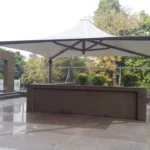
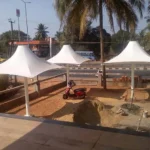
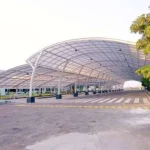
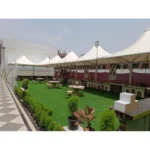
Huge Coverage Without Huge Weight
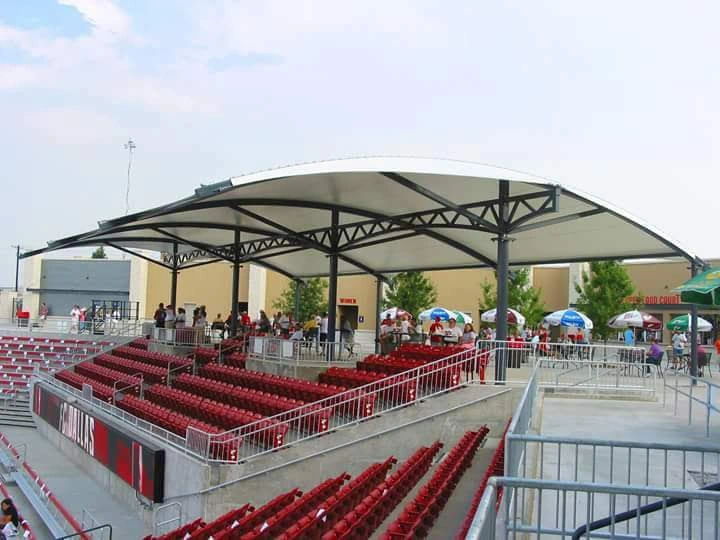
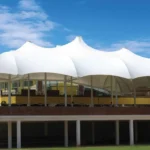
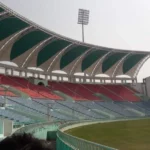
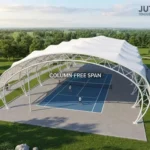
One of the biggest advantages of tensile roofing is its Stadium Tensile Structure capability.
Moreover, it can span enormous distances while remaining surprisingly lightweight.
Therefore, that means fewer heavy structural elements and more open space for spectators in Stadium Tensile Structure.
Exactly what every stadium designer wants.
Weather Protection Without Feeling Closed In
Nobody enjoys sitting through a match under direct sunlight in May.
Or getting drenched halfway through a game because the weather suddenly changed its mind.
A professionally designed stadium tensile structure provides excellent protection against:
- Heavy rainfall
- Strong sunlight
- UV exposure
- Wind loads
- Dust
At the same time, the open design helps maintain natural ventilation.
Moreover, this Stadium Tensile Structure also makes the environment far more comfortable than a fully enclosed stadium.
It Looks Incredible
Let’s be honest.
Sports venues aren’t just built for sports anymore.
They’re branding tools.
They’re landmarks.
They’re destinations.
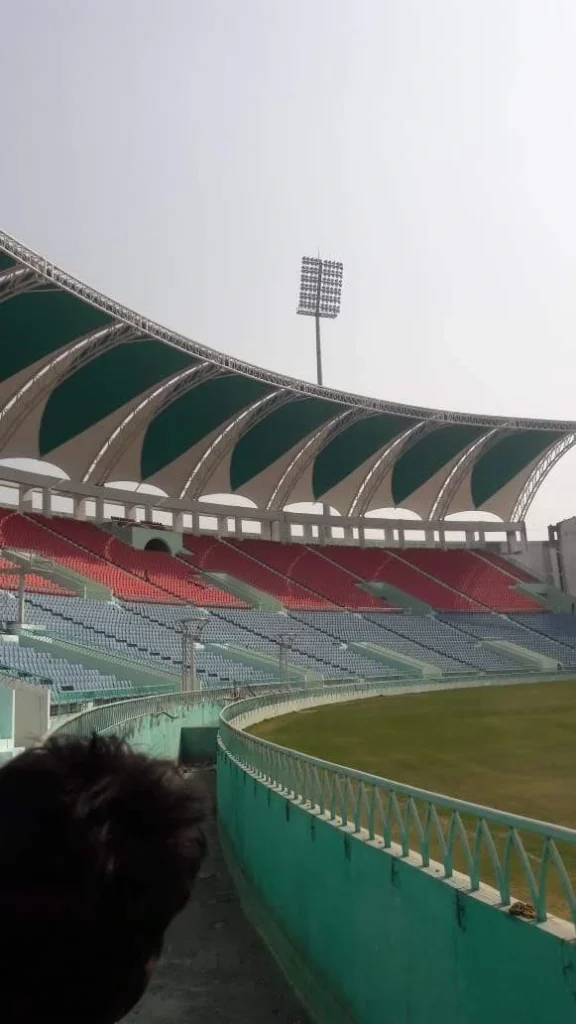
A beautifully designed Stadium Tensile Structure gives a stadium an instantly recognizable identity.
Some stadiums are remembered as much for their roofline as for the matches played inside them.
That’s the power of good architecture.
Where Are Stadium Tensile Structures Used?
Although the name suggests sports stadiums, these structures are suitable for much more.
They are commonly installed at:
- Cricket stadiums
- Football stadiums
- Hockey arenas
- Athletic tracks
- Tennis complexes
- Indoor sports facilities
- Multipurpose sports complexes
- Amphitheaters
- Outdoor concert venues
- Exhibition grounds
- Race tracks
- University sports campuses
- Public event arenas
Every project is unique, which means every tensile roof is engineered specifically for its location, capacity, and functional requirements.
Choosing the Right Material Matters
Not all tensile membranes are the same.
Depending on the project’s size, climate, and expected lifespan, engineers may recommend:
- PVC-coated polyester membranes
- PTFE-coated fiberglass fabrics
- ETFE cushion systems
- High-performance architectural membranes
Each material offers different advantages in terms of durability, translucency, maintenance, and lifespan.
That’s why selecting the right manufacturer is just as important as selecting the right material.
Here’s the Part Most People Never Think About
Everyone admires the finished roof.
Very few people think about what happens before construction even begins.
Months of engineering go into every successful tensile stadium project.
Wind analysis.
Load calculations.
Steel detailing.
Fabric patterning.
Drainage planning.
Connection design.
Installation sequencing.
It’s a fascinating blend of architecture, structural engineering, and precision manufacturing.
In other words…
There’s a lot more happening than simply “putting up a roof.”
Why Developers Trust Archilexis?
Building a stadium roof isn’t a project where guesswork has a place.
It demands technical expertise, premium materials, experienced engineers, and meticulous execution.
That’s why developers, architects, institutions, and infrastructure companies choose Archilexis.
Recognized as one of India’s leading Stadium Tensile Structure manufacturers and among the country’s most trusted tensile structure companies, Archilexis has built its reputation by delivering projects that combine innovation with reliability. We design state-of-the-art enclosures and canopies tailored for shopping malls, hotels, tensile car parking, and sports facilities including basketball, tennis, padel, and badminton courts.
Every structure is carefully planned, engineered, fabricated, and installed to meet demanding quality standards while reflecting the client’s architectural vision.
The company offers complete turnkey services, including:
- Design consultation
- Structural engineering
- 3D modeling
- Steel fabrication
- Membrane fabrication
- Professional installation
- Project management
- After-sales support
In addition to stadium roofing, Archilexis also specializes in:
- Tensile Membrane Structures
- Tensile Walkways
- Entrance Tensile Structures
- Parking Tensile Structures
- Food Court Structures
- Tensile Domes
- Tensile Porches
- Swimming Pool Enclosures
- Tensile Gazebos
- Tensile Shade Sails
- Tensile Facades
- Custom Architectural Fabric Structures
This commitment to quality, innovation, and customer satisfaction has positioned Archilexis as one of the most respected names in India’s tensile structure industry.
Is a Stadium Tensile Structure Worth the Investment?
If you’re planning a sports facility that should perform well for decades…
Absolutely.
A professionally engineered tensile roof provides:
- Long service life
- Lower structural weight
- Faster installation
- Excellent weather protection
- Reduced maintenance
- Modern architectural appeal
- Enhanced spectator comfort
- Outstanding visual identity
It’s one of those rare investments where engineering, functionality, and aesthetics all pull in the same direction.
A Stadium Tensile Structure is much more than a roof over spectator seating. It’s a defining architectural feature that improves comfort, protects visitors, enhances the visual identity of the venue, and supports long-term operational efficiency.
Whether you’re developing a new sports complex, renovating an existing stadium, or designing a multipurpose event venue, choosing the right tensile structure partner is critical.
With innovative engineering, premium membrane materials, expert fabrication, and successful projects delivered across India, Archilexis has become one of India’s leading tensile structure company. From concept to completion, the company delivers stadium tensile structures that combine world-class design with dependable performance—helping clients create venues that are built for today’s events and tomorrow’s legacy.
Frequently Asked Questions (FAQs)
1. What is a Stadium Tensile Structure?
A Stadium Tensile Structure is a lightweight roofing system that uses high-strength membrane fabric stretched over a steel framework to provide weather protection while covering large seating areas efficiently.
2. Why are tensile structures used in stadiums?
They offer large column-free spans, modern architectural appeal, reduced structural weight, excellent weather resistance, and faster construction compared to many conventional roofing systems.
3. Which sports facilities can use stadium tensile structures?
They are ideal for cricket stadiums, football grounds, hockey arenas, athletic tracks, tennis complexes, multipurpose sports venues, and outdoor event arenas.
4. Are stadium tensile structures waterproof?
Yes. Premium PVC and PTFE membrane fabrics are fully waterproof and designed to withstand heavy rainfall and demanding weather conditions.
5. How long does a stadium tensile structure last?
Depending on the membrane material and maintenance, a professionally engineered stadium tensile structure can last between 20 and 30 years, with some premium systems offering even longer lifespans.
6. Can stadium tensile roofs be customized?
Absolutely. Every project is custom-designed based on seating capacity, architectural requirements, local climate, wind conditions, and structural needs.
7. Are stadium tensile structures suitable for Indian weather?
Yes. They are engineered to perform reliably under intense sunlight, heavy monsoon rains, UV exposure, and varying climatic conditions across India.
8. Why choose Archilexis?
Archilexis is recognized as one of India’s leading tensile structure companies, known for innovative designs, advanced engineering, premium materials, precision installation, and complete turnkey solutions for stadium roofs, membrane structures, walkways, canopies, facades, and custom architectural fabric projects.